
Evaluating Ethical Guidelines

Evaluating Ethical Guidelines
19/04/2017Resource extraction has the potential to be highly beneficial in terms of jobs, education, healthcare, and a share of profits but it can also have damaging local consequences if poorly managed. This project has looked systematically at how indigenous peoples and industrial projects can, and do, in fact co-exist across the Norwegian and Russian North, exploring both positive and negative impacts and potential.
Project Members
31/03/2017Evaluating Ethical Guidelines project members from 1 October 2013 to 1 March 2017.
Evaluating international ethical standards and instruments
31/03/2017This paper addresses the key issue of the entire project and undertakes a critical evaluation of standards and instruments through a detailed analysis of their contents, implications, and deficiencies, especially in relation to the interests of indigenous peoples.
Ranking oil, gas and mining companies on indigenous rights in the Arctic
31/03/2017This ranking switches the perspective of the previous paper, and takes the perspective of the original project proposal in a new direction. Rather than evaluating international instruments and guidelines, it critically evaluates companies in their fulfilment of these guidelines.
What is free, prior and informed consent (FPIC)?
31/03/2017This paper explains the importance of FPIC, shows which international instruments require FPIC and how it is interpreted in different situations or by different stakeholders, and discusses the actual process of negotiating and obtaining FPIC.
What is social impact assessment?
19/04/2017Social impact assessment (SIA) is the process of identifying and managing the social impacts of industrial projects. SIA is used to predict and mitigate negative impacts and identify opportunities to enhance benefits for local communities and broader society. This paper explains the core principles of SIA and the SIA requirements of selected international instruments. It also considers some of the key challenges to implementing SIA in practice.
Taking ethical guidelines into the field for evaluation by indigenous stakeholders
19/04/2017Authors: Research Professor Florian Stammler, Sven-Roald Nystø, Dr Aytalina Ivanova Using anthropological fieldwork methods, we took various key international standards and guidelines to industry representatives, local administrators, and nomadic reindeer herders across several sites in the Norwegian and Russian North. The aim was to subject these documents to the critique of the indigenous people who are deeply – and potentially negatively – affected by oil, gas, and mining developments. As far as we know, this has never been done before, especially in remote areas of Russia.
Anthropological expert review: socio-cultural impact assessment for the Russian North
19/04/2017Anthropological Expert Review (AER) is a Russian form of socio-cultural impact assessment, aimed at evaluating the effects of industrial projects on northern indigenous communities, their culture and traditional livelihoods. This paper, co-authored by a Russian AER practitioner and a British SIA practitioner, explains the principles of AER and shows how this works in practice in a range of locations, through working with the affected indigenous communities to identify critical natural resources, water sources and sacred sites. The paper links back to the SIA paper (No.4) and considers the relevance of comparing Russian and international experience of social and cultural impact assessment.
Case study: Nenets AO
19/04/2017The character of relations between companies, authorities and indigenous people depends (often very effectively) on individual agreements among the participating parties.
Case study: Sakha Republic (Yakutia)
20/04/2017A very unusual degree of advanced local legislation, including Russia’s first law on indigenous communities; first law giving a salary to reindeer herders; first and only law on anthropological expert review. However, problems remain in implementation.
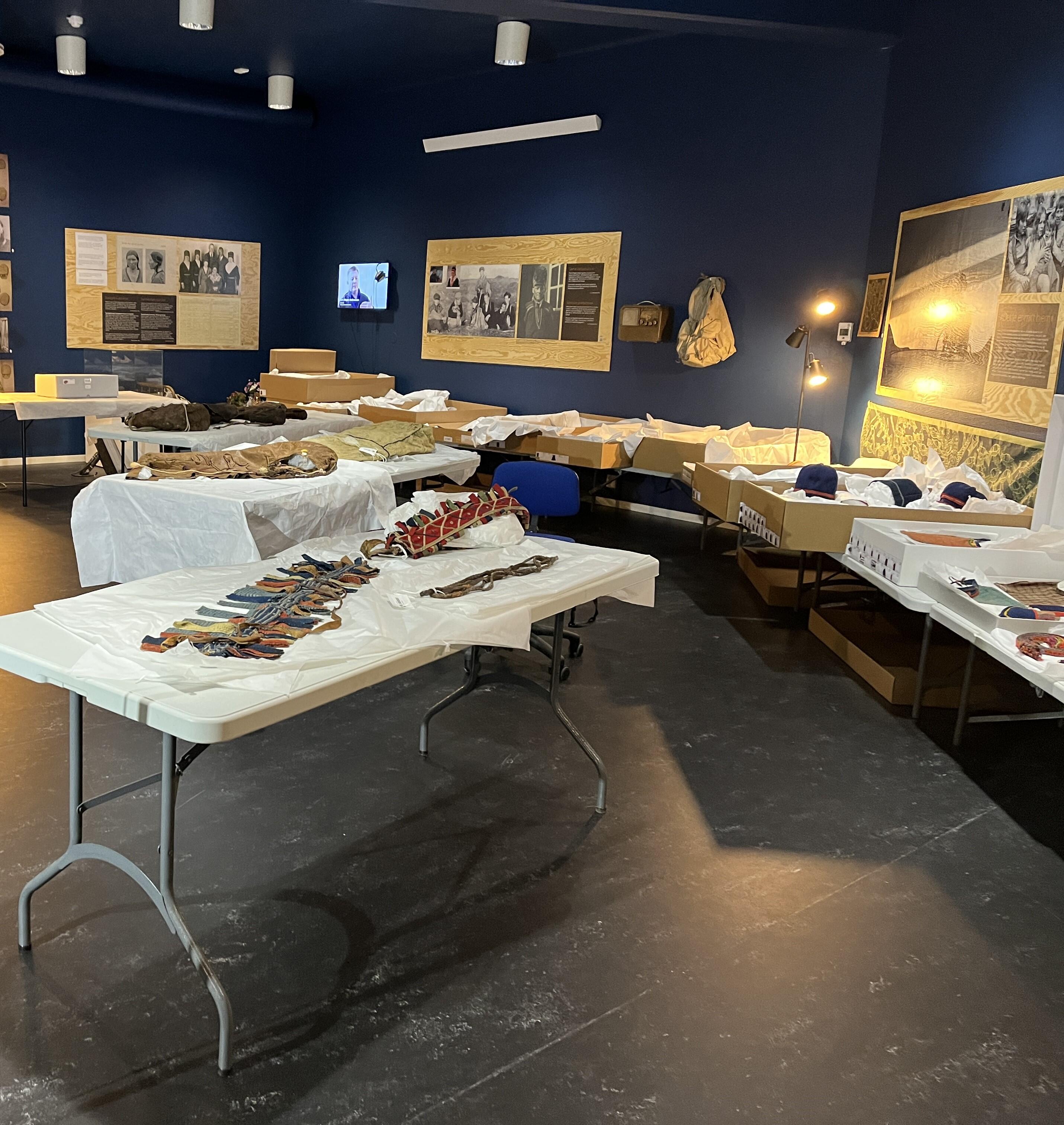
Photo: From the arrival of the Bååstede artifacts. Photographer: Harrieth Aira.