The Residential Schools
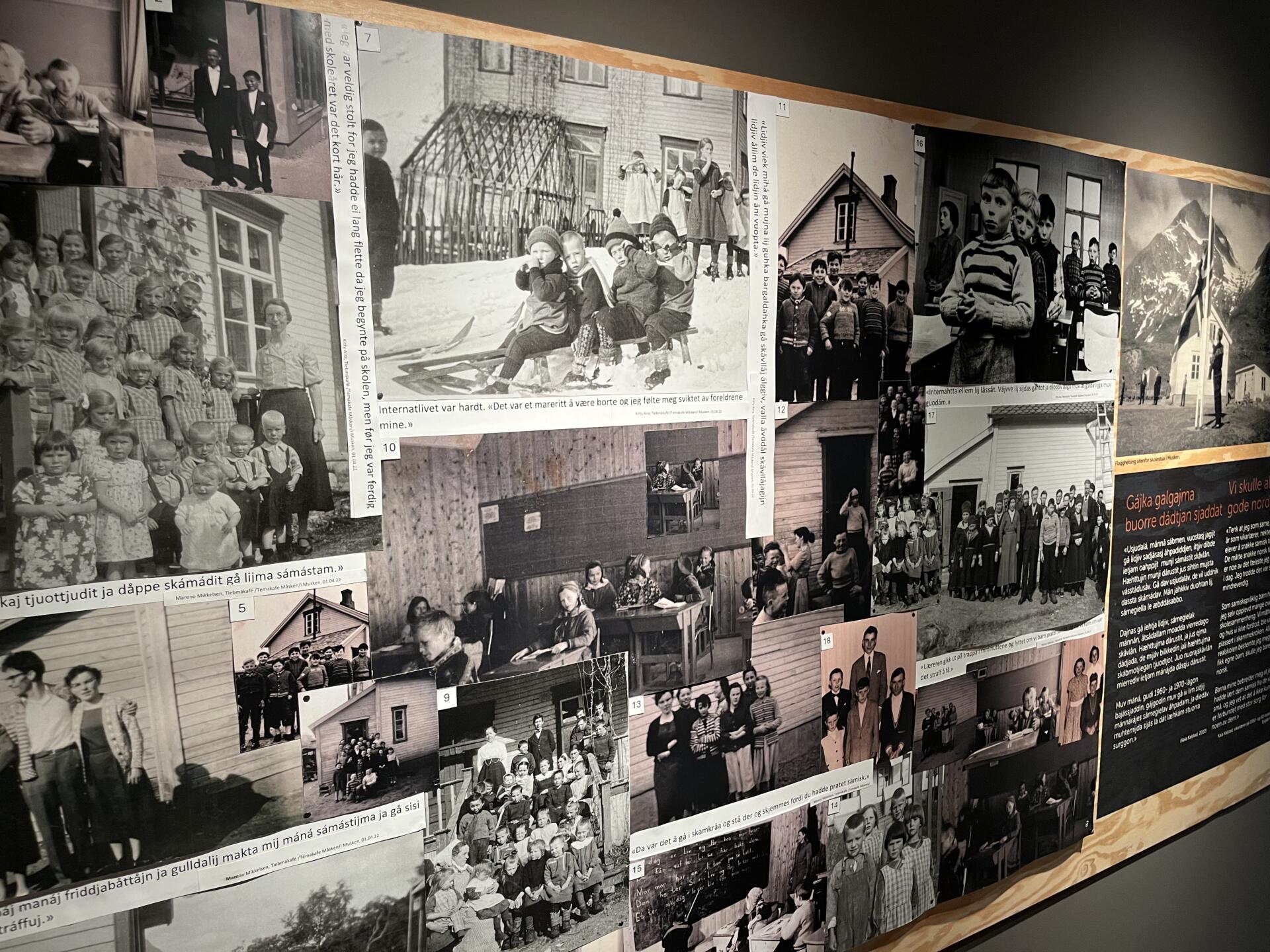
The wall in the exhibition is filled with faces — some looking directly ahead, others turned away. Above them, the title reads: “We were meant to become good Norwegians.”
This exhibition section tells the story of the residential school system in Norway, and the generations of Sámi children who were separated from their homes, communities, and language.
Beginning at the age of seven, Sámi children were sent to boarding schools, often located far from their families. Many spoke only Sámi when they arrived. At school, their language was forbidden.
These institutions were part of a broader state policy of assimilation — an organized effort to make the Sámi population “more Norwegian.” The cost of this policy was profound: it resulted in the erosion of identity, loss of language, and long-lasting damage to trust between individuals and institutions.
Mareno Mikkelsen, from Vuodnabahta/Hellmobotn, recalled being punished simply for speaking Sámi:
“If I said one word in Sámi during recess, I was sent to the corner — sometimes made to stand on one foot. If that wasn’t enough, I had to stay after school while the others went home.”
Over time, he stopped speaking Sámi entirely — even to his own children — out of fear they would experience the same shame and punishment.
“It became a burden I still carry,” he said. “A backpack filled with stones. I hope someone can help me carry it now.”
Kitty Aira was just eight years old when she began school in Måsske/Musken in 1958. She described her first year as one marked by grief, longing, and silence.
“We cried a lot,” she said. “And during recess, we’d run away from the schoolyard — just far enough so we could speak Sámi in secret.”
Both Kitty and Mareno later gave testimony to Norway’s Truth and Reconciliation Commission.
Their experiences are not unique, but each is deeply personal. Each story carries the weight of history — and helps illustrate what the policy of assimilation truly cost: not only a language, but a sense of belonging, safety, and identity.