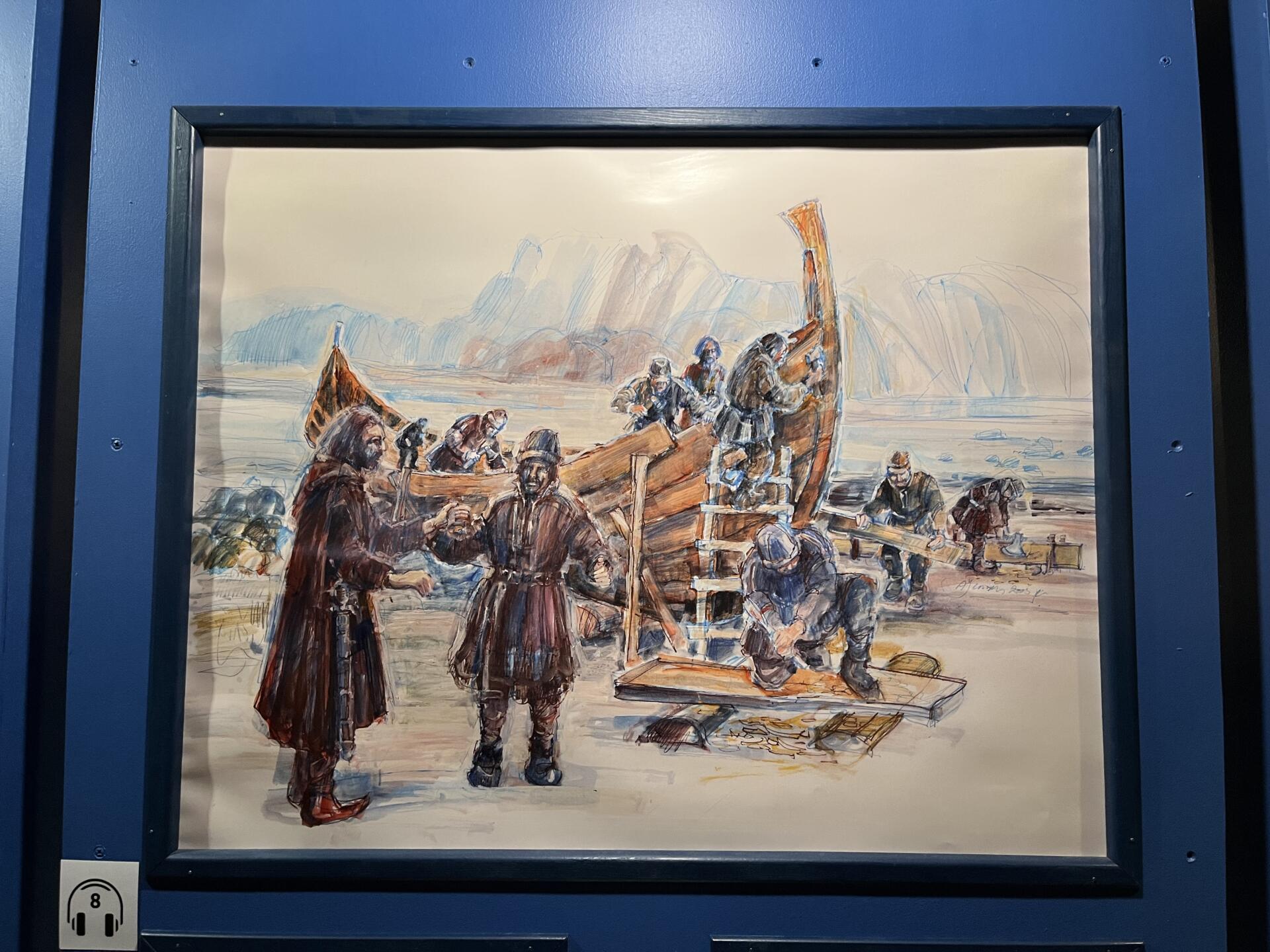
Sami Boatbuilding
Along the coast of Northern Norway, boats have always been essential to Sámi life. They served not only for travel and fishing, but as a means of trade, subsistence, and connection between communities.
Over the centuries, the Sámi played a significant role in the development of the Nordland boat — from small rowing vessels to larger cargo boats capable of navigating both fjords and open sea.
This maritime tradition continued into the 20th century. Sámi boatbuilders began constructing modern fishing vessels, initially from wood and later from fiberglass. These boats, often 25 to 30 feet in length, were designed for durability and seaworthiness — capable of withstanding demanding weather conditions and long working days at sea.
Historical references to Sámi boatbuilding appear in early written sources. One of the most well-known accounts is found in Heimskringla, the royal saga collection written by Icelandic historian and poet Snorre Sturlason in the 13th century.
According to Heimskringla, during the winter of 1138–1139, Sigurd Slembe — a pretender to the Norwegian throne — took refuge in the far north with the deposed King Magnus the Blind. There, Sámi boatbuilders crafted vessels for their escape. Snorre writes:
“Sigurd spent the winter in Hålogaland... and he had two boats built for him by the Laplanders. They were fastened together with reindeer sinew, built without nails, and used willow twigs instead of knees. Each boat could carry twelve men, and they were so light that no ship could catch them.”
These boats — lightweight, fast, and constructed entirely from natural materials such as reindeer sinew, willow, and wood — reflect a deep knowledge of materials, environment, and purpose. They were shaped not only by necessity, but by generations of refined skill.
The story, written nearly 900 years ago, stands as enduring testimony to the ingenuity and craftsmanship of Sami boatbuilders — a tradition that continues into the present day.