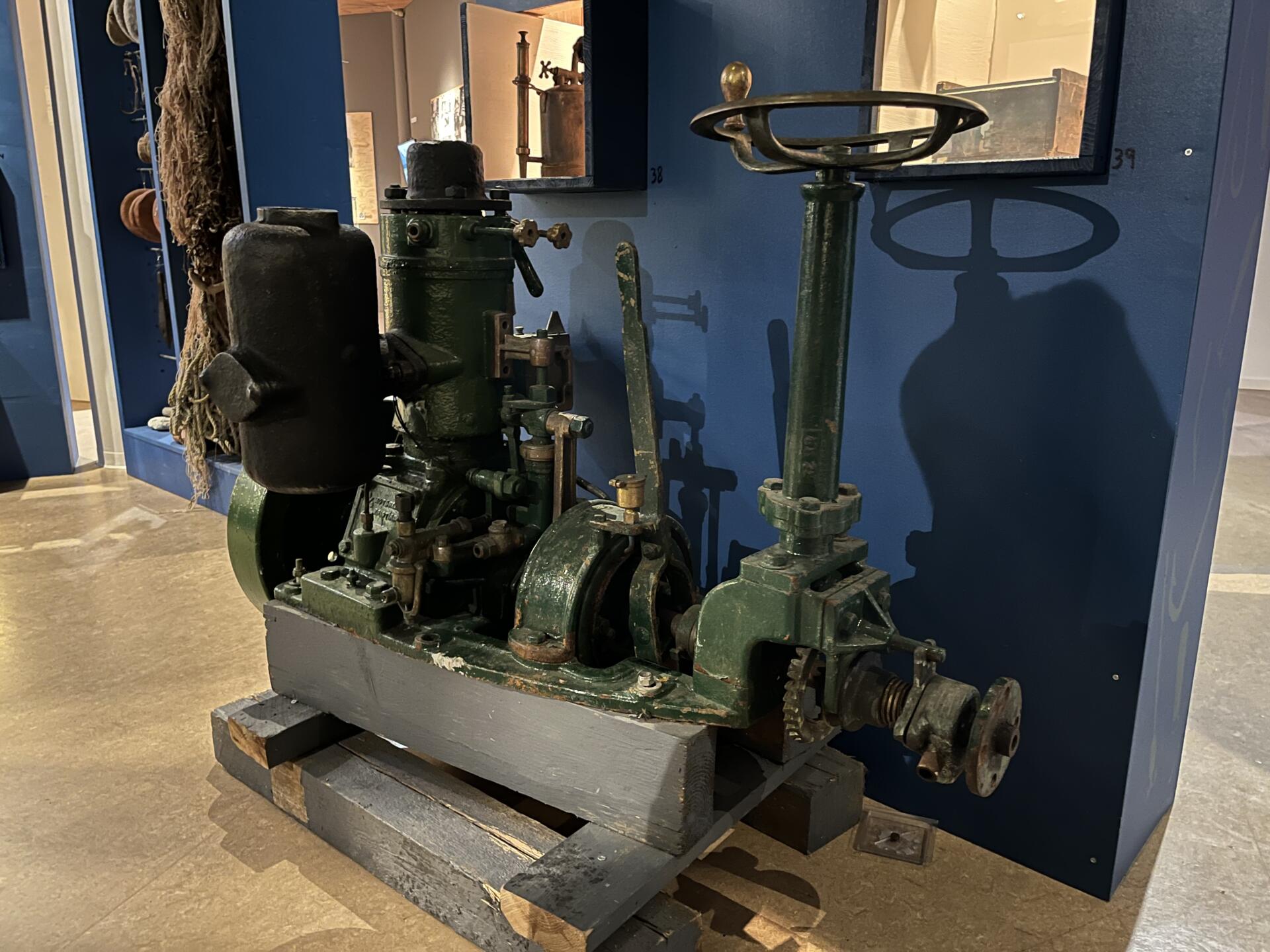

The Enigne and Hunting Large Sea Mammals
At the turn of the 20th century, maritime practices along the northern coast of Norway began to shift significantly. One of the most transformative changes was the introduction of engines in fishing vessels, gradually replacing traditional sails and oars with mechanical power.
In 1922, the first known Sámi fishing boat equipped with an engine was launched from Måsske/Musken in Divtasvuodna/Tysfjord. The introduction of engines, however, was gradual — primarily due to cost. In 1905, a 10-horsepower Dan engine cost approximately 3,500 Norwegian kroner. By contrast, the largest sail-rigged Nordland boat, outfitted with five to six pairs of oars, cost only around 400 kroner.
This economic gap meant that fewer Sámi than Norwegians installed engines in their boats. While financial limitations were likely a factor, other reasons may have included differing priorities or alternative ways of using and relating to the sea.
For some, hunting sea mammals provided an important supplemental income. In 1907, Petter and Geira Nilsen Kuoljok from Missto/Mistfjord near Bodø were photographed after catching a dolphin. Shark fishing also contributed to local economies; the liver and blubber were rich in oil, used in lamps, candles, and tar production. The remaining parts of the animal — including meat and bones — were also put to use.
Not everything taken from the sea was for human consumption. Shellfish, for instance, were not considered food at the time, but seashells were harvested using tools such as shell tongs and shell ploughs, then used as bait for line fishing.
Today, some of those same shellfish species are farmed commercially and considered delicacies.
From the era of oars to the age of engines, and from subsistence to trade, the relationship between coastal Sami communities and the sea has continued to evolve — shaped by adaptation, resilience, and innovation.