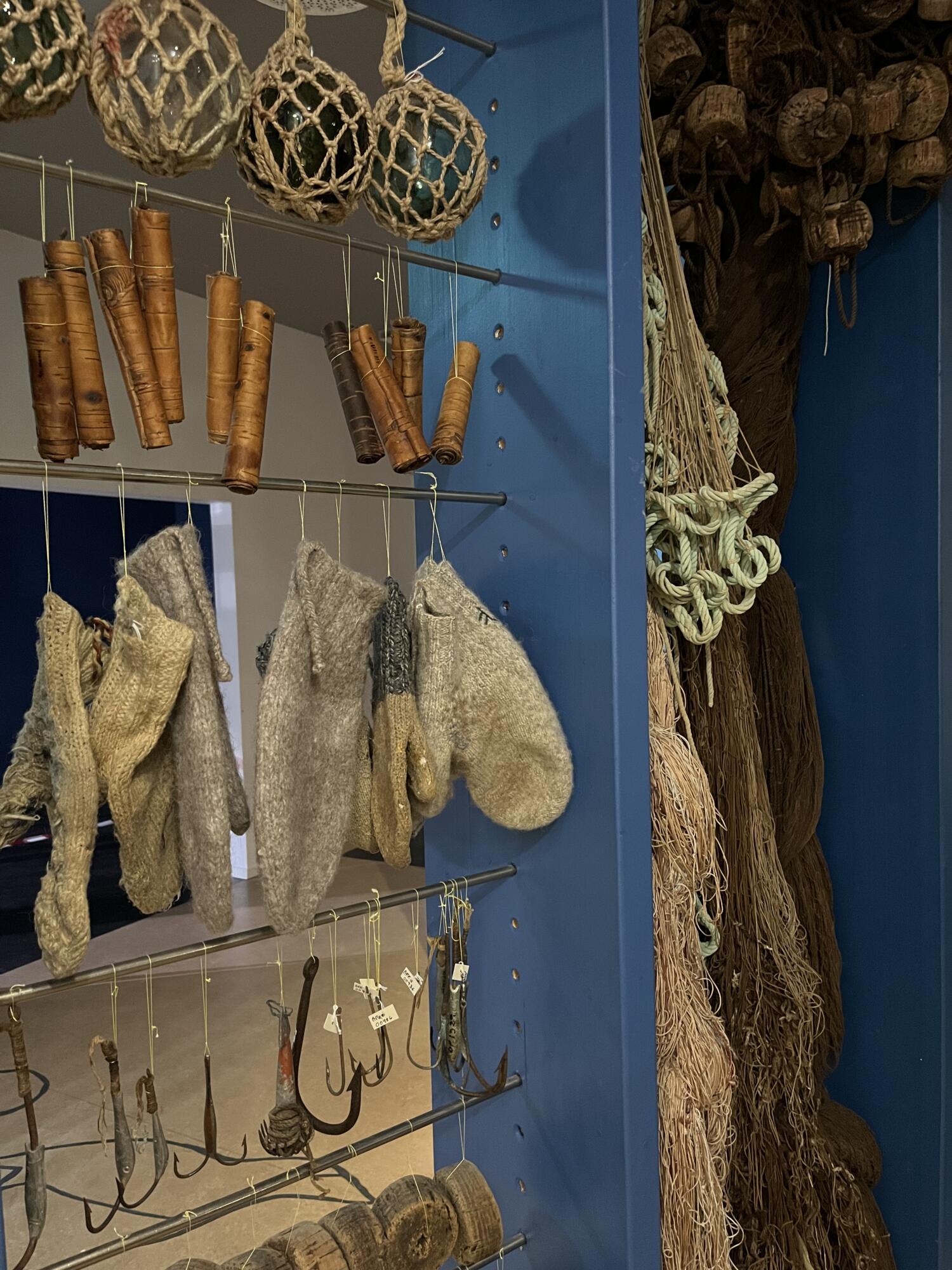

The Lofoten Fisheries, Sámis as boat builders and shipping of goods
For over a thousand years, the seasonal fisheries of Lufoahtta/Lofoten have shaped life along the coast of Northern Norway.
While the exact point at which the Sámi entered the commercial fisheries is unknown, it is possible they were involved from the earliest stages.
Sámi fishers arrived with their own boats, crews, and often their own tents. Depending on the weather, they slept in tents, beneath overturned boats, or in caves. Everything they required for the season was packed in a carefully organized Lofoten travelling chest: warm clothing, tools, food, and often a psalm book for reading during storms.
Sámi women also took part in the fisheries — a fact sometimes overlooked in historical accounts.
In addition to being skilled sailors, the Sámi were highly regarded as boatbuilders. In 1138, a saga recounts how Sigurd Slembe, a pretender to the Norwegian throne, spent a winter with the Sámi on Iinnasuolu/Hinnøya. There, Sámi builders constructed two fast ships for him — reportedly unmatched in speed.
From the Saga Age through later centuries, the Sámi constructed a wide range of vessels, from small faerings (four-oared boats) to larger cargo ships. Their craftsmanship contributed to both local and regional maritime traditions.
High-quality boats required proper tools, and the Sámi were also accomplished blacksmiths. They forged their own iron tools, producing items such as nails, blades, and fittings.
The Nordland boat — like the one displayed in this exhibition — represents a shared maritime heritage between Sámi and Norwegian communities.
When catches were successful, the journey continued south to Biergun/Bergen. Sámi sailors transported stockfish and engaged in trade, exchanging their goods for flour, grain, tobacco, clay pipes, and other items, including small luxuries. Reindeer horn spoons and furs were also sold, each object carrying traces of its origin and culture.
The sea was a source of livelihood, but also posed significant risks. In oral tradition, one woman near Gásluokta/Kjøpsvik is said to have climbed a mountain to yoik — sing in the Sámi tradition — in an effort to guide her husband’s boat safely through a storm.
By the 16th and 17th centuries, everyday Sámi life included elements of long-distance trade. Meals were sometimes eaten from ceramic dishes made in Tråante/Trondheim, while imported pipes from England and the Netherlands brought tobacco — and stories — to the fireside.