
The Sámi Border Pilots
During the Second World War, the fjords and mountains of Divtasvuodna/Tysfjord became discreet but vital corridors of resistance.
More than 3,000 refugees were guided across the border to Sweden through a system built on trust, bravery, and deep local knowledge.
The exhibition map highlights one key area: Hellmobotn, or Vuodnabahta, where Norway is at its narrowest — only 6.3 kilometers in a straight line from the fjord to the Swedish border. Though short in distance, the route was treacherous and exposed.
The geography of Divtasvuodna — shaped by four branching fjords: Oarjjevuodna/Hellmofjorden, Rudnávuodna/Grunnfjorden, Spællá/Mannfjorden, and Gievsfierdda/Inner-Tysfjorden — posed both obstacles and strategic opportunities. The terrain was harsh, but it was familiar ground for the Lule Sámi, who knew every trail, passage, and hiding place.
The refugee movement was not driven by border guides alone. It was a collective effort involving entire communities: men, women, and children each played essential roles.
Women prepared food, sewed clothing and komager (traditional leather/hide footwear), and opened their homes to those fleeing. Children contributed as well — helping refugees learn to ski or dress for winter conditions. Their understanding was often greater than many adults recognized.
Some routes passed through Måsske (Musken); others began by boat from Gásluokta/Kjøpsvik. Footprints were erased, paths concealed, and silence carefully maintained.
A personal story displayed in this exhibition centers on Nils and Petra Knutsen, an elderly couple from Smájille/Leirelv. In January 1945, Petra saw a patrol vessel entering the fjord. Her husband Nils and his brother Anders — both active in the refugee network — were out fishing. She managed to warn them just in time, and they escaped into the mountains.
Petra fled with them, wearing only a house dress, scarf, and mittens. Together, they crossed into Sweden, leaving their children behind in hiding.
The children were later taken hostage by Norwegian SS guards and held in terrifying conditions for a week before the local teacher intervened and secured their release.
When the family returned in April, they found their home ransacked. Food had been eaten, furniture destroyed, bedding shredded, and human waste left inside.
Then came the final tragedy.
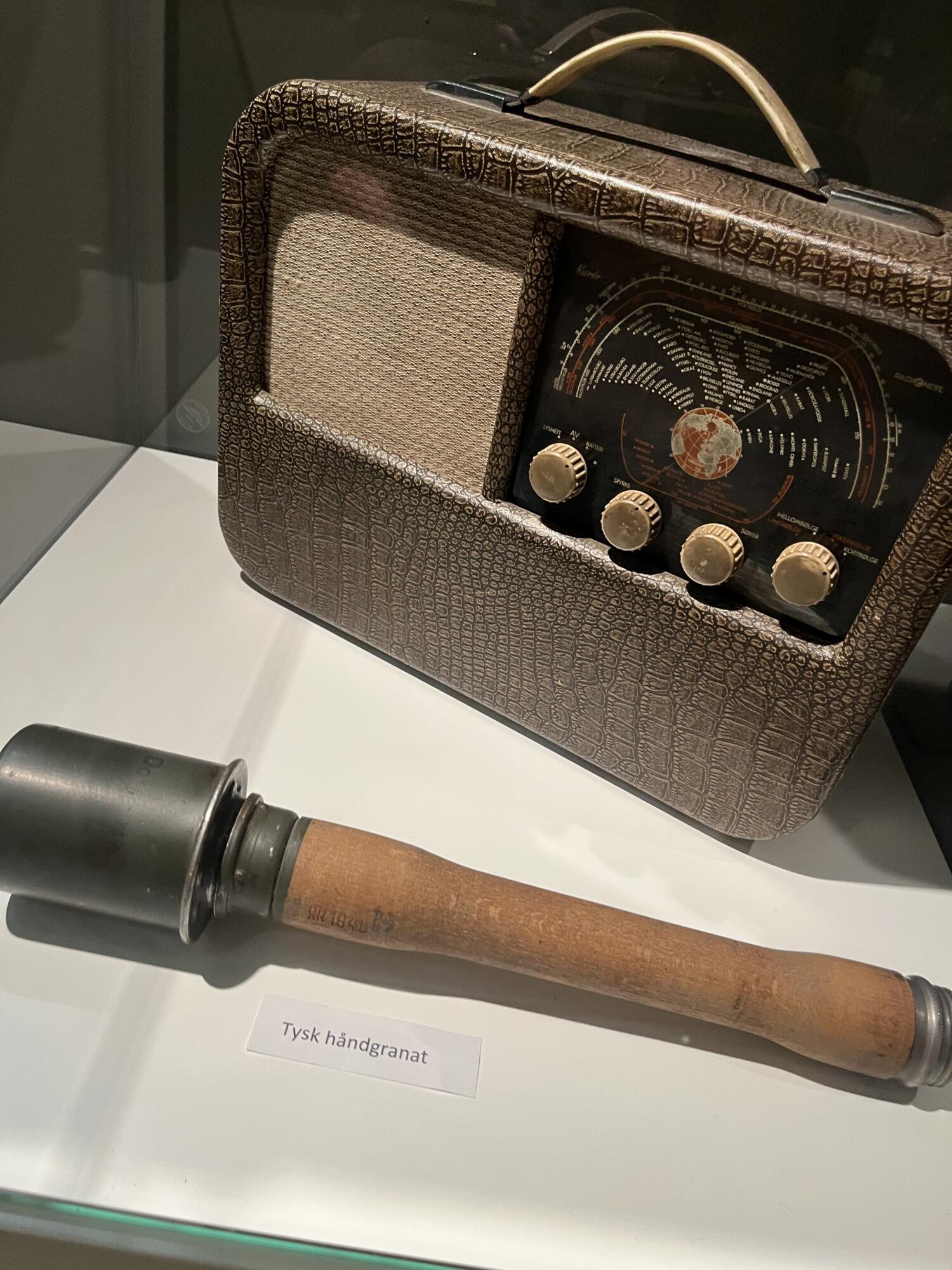
Their eight-year-old son, Jåvvå, found a grenade left behind. He carried it into the house. Told to take it outside, he closed the door behind him — and it exploded. While the rest of Norway celebrated liberation on 8 May 1945, Nils and Petra buried their son. The grenade displayed in this exhibition serves as a reminder — not only of that day, but of everything that was lost.
Yet the trauma did not end with the war. In February 1945, before the conflict had even ended, residents of Divtasvuodna/Tysfjord were accused of treason. Investigations continued until 1948. Although the charges were eventually dropped, the damage was lasting. An official apology was not issued until 2019.
The roots of these accusations lay in racism. The same ideology that once sought to measure Sami skulls now cast suspicion on Sámi loyalty. In places such as Divtasvuodna and Jåhkåmåhkke/Jokkmokk, the perception of the Sámi as “other” fed distrust — not recognition or gratitude.
Even in postwar Norway, structural racism persisted:
In who was believed.
In who was honored — and who was questioned.
For many in the community, these memories remain vivid — not only of courage, but of misjudgment, misrepresentation, and long-standing silence.
To understand this history is to acknowledge that the war left lasting scars. But it also reveals something enduring:
That courage does not always wear a uniform.
Sometimes, it moves quietly — through fjords, forests, and deep snow — and lives on in the quiet decisions made to protect others.