The Fur Trade
Fur has long been among the most valued materials in European history. Alongside wool, it represented more than mere fabric — it served as a foundation for survival, trade, and social status.
On one side of the exhibition, the focus is on ermine — the white winter coat of the weasel (Mustela erminea). This fur became a prominent symbol of royal and judicial authority in Europe. Historically, ermine was used in coronation robes and ceremonial garments, a tradition that continues today in countries such as England and France.
Portraits of monarchs like Louis XIV of France, known as the Sun King, depict them cloaked in ermine, emphasizing status and sovereignty. The precise origin of such furs is often unknown, but it is possible that some came from Arctic and subarctic regions, including areas inhabited by the Sami. In these northern landscapes, ermine is native, and fur was an integrated part of everyday life and trade.
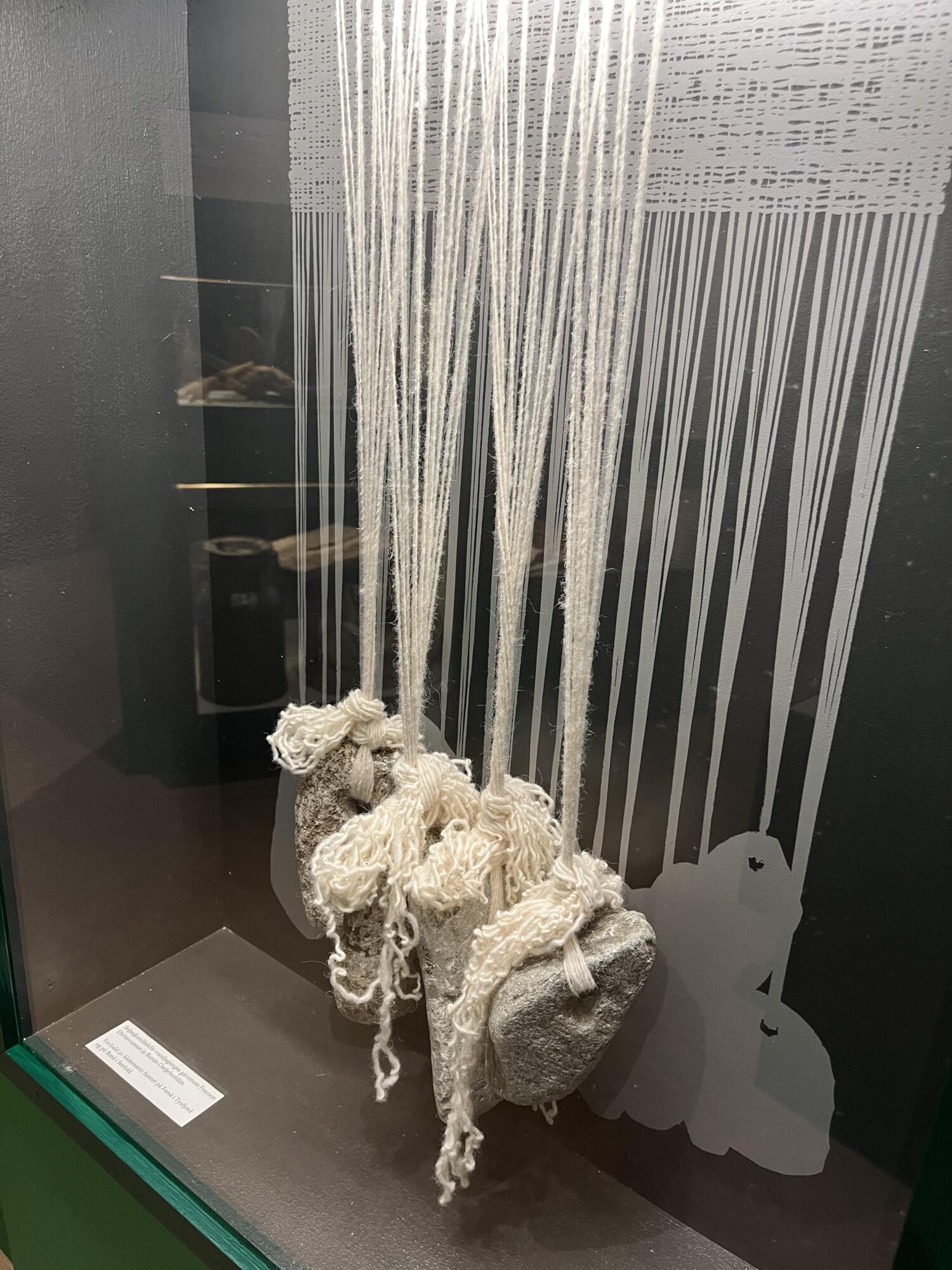
On the other side of the space, the emphasis shifts to wool production. The process includes carding, spinning, and weaving — fundamental techniques in textile creation. Before the widespread use of spinning wheels, thread was twisted by hand using drop spindles. Upright looms, held in tension by weights, were employed to weave cloth. This type of loom dates back to the Bronze Age and continued to be used in Sami areas long after it had disappeared elsewhere in Europe.
In Olmmáivággi/Manndalen in Romsa/Troms, this weaving tradition remains alive, particularly in the production of tapestries, where knowledge and techniques are passed down through generations.
Surrounding the display are original tools connected to fur and wool work: an arrowhead used in hunting, a soapstone spindle whorl, and loom weights used in vertical weaving. Each artifact stands as a silent witness to centuries of skilled craftsmanship, subsistence, and cultural continuity.