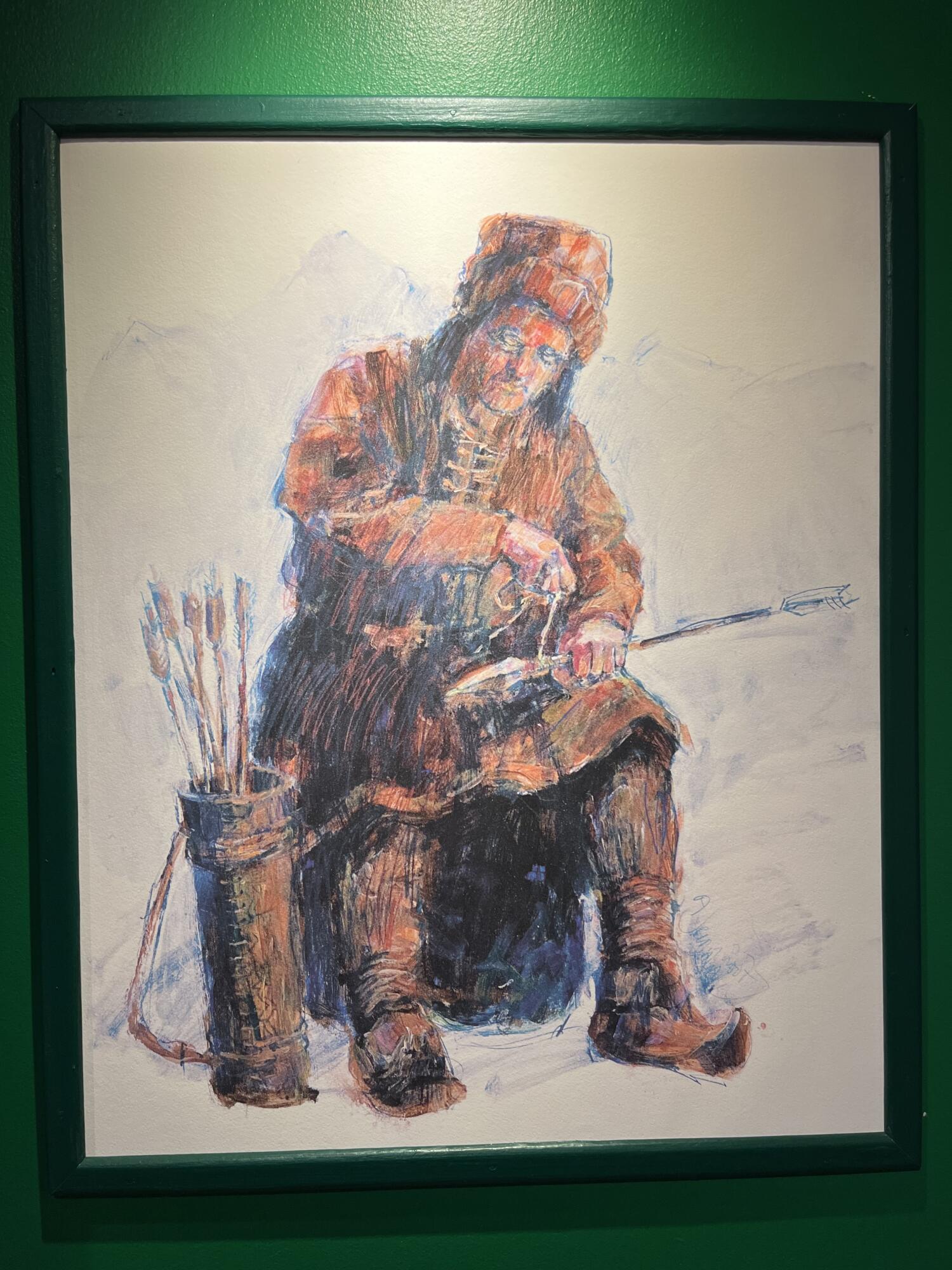

From Hunter to Farmer
The green zone highlights how the Sami adapted to inland environments over centuries.
As early as the year 890, the chieftain Ottar described how the Sami used domesticated reindeer as decoys to hunt wild ones — an early form of sustainable hunting. Over time, particularly during the Viking Age, this practice developed into organized reindeer herding with larger, managed herds.
However, reindeer herding represented only one aspect of Sami subsistence.
A poem by the skald Øyvind Skaldespiller from the 10th century offers insight into daily life and seasonal challenges. He wrote:
“It’s snowing...
As Finns we have enclosed
Animals with the budding birch
In the middle of summer.”
These lines suggest the early presence of livestock such as sheep and goats in Sami communities, and the demands of caring for them under difficult conditions.
At Gásluokta/Kjøpsvik, soil analyses have revealed evidence of grazing and barley cultivation dating back to the 900s. Notably, signs of continued agricultural activity appear even around 1350 — a period when many Norse farms were abandoned due to the Black Death.
By the 17th century, written sources confirm that coastal Sami communities engaged in mixed farming. In 1671, a missionary described how the Sami lived alongside Norwegians, raising cows, goats, and sheep, while also cultivating the land.
He concluded:
“The one who sows the most, reaps the best reward.”